I’m pleased to be part of the postgraduate organising committee for the first postgraduate conference at SOAS that focuses on Southeast … More
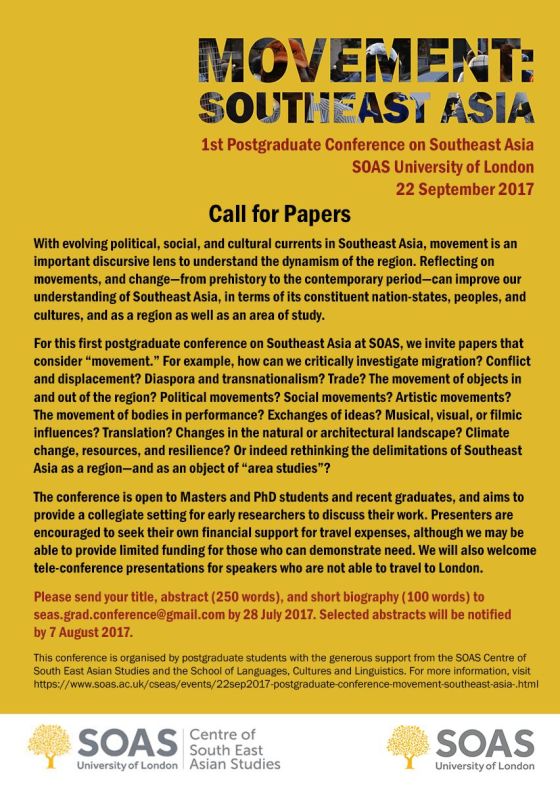
I’m pleased to be part of the postgraduate organising committee for the first postgraduate conference at SOAS that focuses on Southeast … More

Live programme curated by Annie Jael Kwan in association with Something Human and Iniva, followed by Q&A

First presented in 2015 at Tate Britain under the title “Artist and Empire: Facing Britain’s Imperial Past” the show’s October 2016 debut at the National Gallery Singapore (NGS), entitled “Artist and Empire: (En)countering Colonial Legacies” is curated by the local team comprised of Low Sze Wee, Melinda Susanto and Toffa Abdul Wahed, marking the NGS’s second international collaboration (the first was with Paris’s Centre Pompidou).
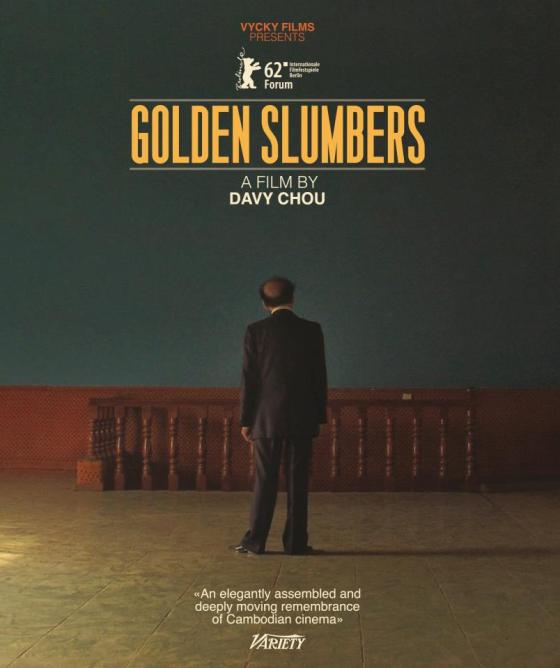
A symposium and screening programme of screenings of two feature-length films by Cambodian filmmakers and a series of short films by emerging filmmakers from Southeast Asia.

I first saw the Le Brothers’s large-scale three-channel video projection installation Into the Sea (2011) at the 2013 Singapore Biennale. The video featured the identical male twins in a series of beautifully filmed scenes set against the languid backdrop of the ocean. On one screen, the long-haired shirtless pair dig into the sand on a beach, and one buries the other in the sand.
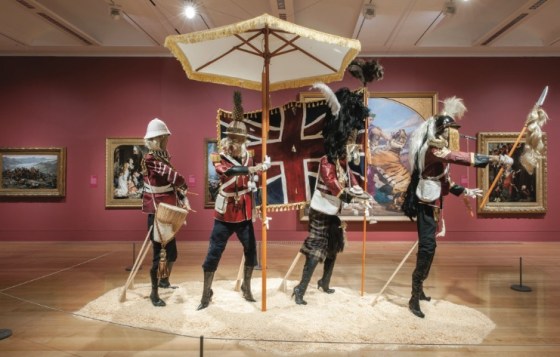
The title of the Tate Britain exhibition “Artist and Empire: Facing Britain’s Imperial Past” overstated the reach of the actual show. Held from November 2015 until April 2016 and curated by Alison Smith, David Blayney Brown, Carol Jacobi and Caroline Corbeau-Parsons, experts in Brtish art from the late 18th century to the 20th century, “Artist and Empire” featured 200 selected objects, drawn exclusively from British collections and spanning different historical genres such as maps, heroic paintings, collectibles, portraiture and the artworks made in response to the aftermath of empire. The curatorial description in the visitor’s booklet invited the audience “to consider how [the artworks’] status and meaning change over time. In reflecting imperial narratives and postcolonial re-evaluations, [the exhibition] foregrounds the peoples, dramas and tragedies of Empire and their resonance in art today.”
 Annie Jael Kwan